
 Forest Services
What is Disaster Management?
Disaster management is the organized process of planning, coordinating, and implementing actions to reduce the impact of disasters on people, property, and the environment. It involves the preparation, response, recovery, and mitigation of disasters to ensure communities can effectively handle emergencies. Disaster management is essential for protecting lives, reducing economic losses, and restoring normalcy after events like earthquakes, floods, or industrial accidents.
Proper disaster management involves collaboration between governments, organizations, and individuals to create a robust system for disaster preparedness and recovery. It addresses all phases of a disaster to build resilient communities that can recover quickly.
Disasters: Definition and Impact
What is a Disaster?
A disaster is a sudden event that severely disrupts the normal functioning of a community, causing significant human, economic, and environmental losses. According to the United Nations Office for Disaster Risk Reduction (UNDRR), a disaster occurs when hazards combine with vulnerabilities and inadequate measures to handle risks.
Disasters can result from:
- Natural Events: These include earthquakes, hurricanes, tsunamis, and wildfires caused by natural processes.
- Human-Made Causes: Examples include pollution, deforestation, industrial accidents, and unsafe urban development.
Impacts of Disasters
- Human Losses:
- Disasters can cause injuries, loss of life, and displacement, leaving survivors in need of urgent assistance.
- Economic Damage:
- Disasters often disrupt livelihoods and damage businesses and infrastructure, leading to significant financial losses.
- Environmental Harm:
- Disasters can destroy ecosystems, pollute natural resources, and harm biodiversity.
Measuring Disaster Damage
The extent of disaster damage is often measured in:
- Physical Units: Square meters of destroyed homes or kilometers of damaged roads.
- Economic Terms: Financial costs of recovery and rebuilding.
- Environmental Impact: Damage to natural resources, such as forests and wetlands.
Hazards, Vulnerabilities, and Risks in Disaster Management
Disasters occur when hazards interact with vulnerabilities in a community. Understanding these factors is crucial for effective disaster management.
Hazards
A hazard is any dangerous condition or event that has the potential to cause harm to people, property, or the environment. Hazards are classified into:
- Natural Hazards: These result from natural processes and include:
- Geophysical Hazards: Earthquakes, volcanic eruptions, landslides.
- Hydrological Hazards: Floods and avalanches.
- Climatological Hazards: Droughts, extreme temperatures, wildfires.
- Meteorological Hazards: Hurricanes, cyclones, and severe storms.
- Biological Hazards: Disease outbreaks, epidemics, and pest infestations.
- Human-Made Hazards: These are caused by human actions or negligence, including:
- Industrial Accidents: Chemical spills, gas leaks.
- Deforestation: Leading to soil erosion and landslides.
- Pollution: Contamination of air, water, and soil.

Natural Hazards
Vulnerabilities in Disaster Management
Vulnerability refers to the weaknesses or conditions that make a community more likely to suffer from the effects of a disaster. There are several types of vulnerabilities:
- Economic Vulnerability:
- Poorer communities often live in unsafe areas like floodplains or unstable slopes because they cannot afford safer housing.
- Physical Vulnerability:
- This refers to infrastructure and proximity to hazards. For example, homes built near rivers are more prone to flooding.
- Social Vulnerability:
- Certain groups, such as children, the elderly, and people with disabilities, face greater risks during disasters.
- Environmental Vulnerability:
- Fragile ecosystems, such as wetlands and forests, are highly sensitive to the effects of disasters.
- Attitudinal Vulnerability:
- Communities with a lack of awareness or a negative attitude toward disaster preparedness are often more dependent on external aid.
Risks in Disaster Management
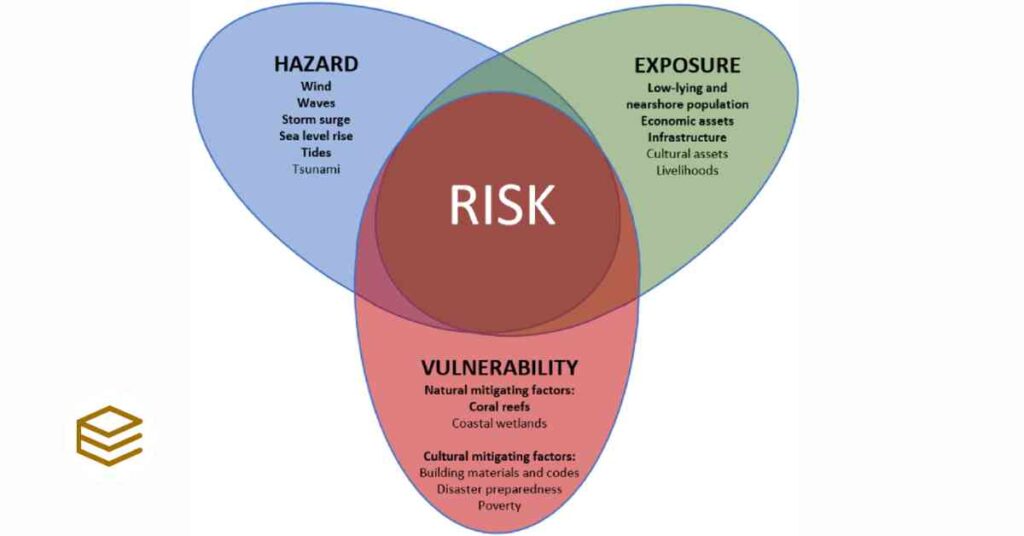
Risk in Disaster Management is the likelihood of harm or damage occurring when a hazard interacts with vulnerabilities. It can be calculated using the formula:
Risk = Probability of Hazard × Degree of Vulnerability
For example:
- A well-prepared city with strong disaster management measures has a lower risk during a hurricane compared to an unprepared coastal village.
Managing Risks
Effective disaster management includes strategies to manage risks, such as:
- Risk Acceptance:
- A community decides to accept the potential consequences of a hazard if avoiding it is impractical or costly.
- Risk Avoidance:
- Avoiding activities or locations that increase exposure to hazards, such as not building homes in flood-prone areas.
- Risk Reduction:
- Implementing measures to reduce vulnerabilities, like constructing earthquake-resistant buildings.
- Risk Transfer:
- Transferring the financial burden of risk to another party, such as purchasing insurance to cover potential losses.
Classification of Disasters in Disaster Management
Disasters can be categorized based on their source and duration. These classifications help in designing specific strategies for effective disaster management and preparedness.
Classification Based on Source
- Natural Disasters:
Natural disasters are caused by natural phenomena, such as geological, meteorological, or biological processes. These disasters can further be divided into:- Exclusively Natural Disasters:
These occur purely due to natural processes without any human interference. They are often sudden, unpredictable, and have widespread effects.
Examples:- Cyclones: Storms with strong winds and heavy rainfall, formed by low-pressure systems over oceans.
- Tsunamis: Massive sea waves triggered by underwater earthquakes or volcanic eruptions.
- Earthquakes: Sudden shaking of the Earth’s surface due to tectonic plate movements.
- Volcanic Eruptions: Explosive release of magma, gases, and ash from beneath the Earth’s crust.
- Socio-Natural Disasters:
These disasters arise from a combination of natural factors and human activities. Human negligence or poor planning often exacerbates their effects.
Examples:- Floods: Caused by heavy rainfall, worsened by blocked drainage systems or unregulated urbanization.
- Landslides: Triggered by natural rainfall but worsened by deforestation or mining activities.
- Fires: Often started by lightning but spread due to uncontrolled human actions like unattended campfires.
- Exclusively Natural Disasters:
- Anthropogenic (Human-Made) Disasters:
Anthropogenic disasters are caused by human activities, negligence, or technological failures. These events often result from industrial operations, energy production, or social conflicts.
Examples:- Industrial Accidents: Fires, explosions, or toxic gas leaks in factories.
- Toxic Waste Leaks: Contamination of water or soil due to improper disposal of hazardous materials.
- Dam Failures: Collapse of dams due to poor maintenance or overpressure.
- Pollution: Air, water, or land pollution caused by industrial emissions or waste mismanagement.
- Wars and Civil Strife: Armed conflicts leading to loss of lives, destruction of infrastructure, and mass displacement.
Classification Based on Duration
Disasters are also classified based on how quickly they occur and the timeframe of their impact. They can be categorized into:
- Rapid Onset Disasters:
These disasters occur suddenly and have an intense impact over a short period of time. They are often unpredictable or come with limited warning.
Examples:- Earthquakes: Lasting seconds or minutes, these can cause widespread destruction.
- Cyclones: Although they form over days, their impact is sudden and often devastating.
- Floods: Especially flash floods, which occur with little to no warning.
- Tsunamis: Fast-moving sea waves that hit coastlines within minutes or hours of an underwater earthquake.
- Occur with little warning.
- Require immediate emergency response and rescue operations.
- Slow Onset Disasters:
Also known as Creeping Emergencies, these disasters develop gradually over time, sometimes taking months or years to unfold. They may allow for some preparation, but their long-term impacts on ecosystems and livelihoods are often severe.
Examples:- Climate Change: Gradual warming of the planet caused by greenhouse gas emissions, leading to extreme weather events and rising sea levels.
- Desertification: The transformation of fertile land into arid areas due to overgrazing, deforestation, and unsustainable agriculture.
- Soil Degradation: Loss of soil fertility due to pollution, erosion, or overuse, leading to reduced agricultural productivity.
- Droughts: Prolonged periods of water scarcity caused by low rainfall and poor water management.
- Impact unfolds over time, often unnoticed initially.
- Causes gradual degradation of livelihoods, forcing communities to adapt or migrate.
Key Insights for Disaster Management
The classification of disasters into natural, human-made, rapid onset, and slow onset helps in designing specific approaches to manage their effects. Rapid onset disasters demand immediate emergency responses, while slow onset disasters require long-term planning and sustainable development practices. By understanding these classifications, communities can enhance their resilience and minimize the devastating impacts of disasters.
Definitions and Quotes on Disaster Management
Definitions of Disaster Management by Various Organizations
- United Nations Office for Disaster Risk Reduction (UNDRR):
- "Disaster management is the organization and management of resources and responsibilities for addressing all aspects of emergencies, in particular preparedness, response, and recovery, to lessen the impact of disasters."
- International Federation of Red Cross and Red Crescent Societies (IFRC):
- "Disaster management involves the systematic process of using administrative decisions, organizational skills, and operational capacities to implement policies, strategies, and coping mechanisms for reducing disaster risks and dealing with the aftermath of disasters."
- National Institute of Disaster Management (NIDM), India:
- "Disaster management is a continuous and integrated process of planning, organizing, coordinating, and implementing measures for prevention, mitigation, preparedness, response, and recovery to reduce the impact of disasters."
- World Health Organization (WHO):
- "Disaster management includes all measures, including prevention, preparedness, response, and recovery, taken to minimize the impact of disasters on people and their environments."
Quotes on Disaster Management for Mains Exam
- "Preparedness is the only way we can combat a natural disaster."
– John Quinlan - "Resilience is not about being unbreakable; it’s about being able to bounce back from disasters stronger than before."
– Unknown - "Disasters teach us humility. They remind us of our shared vulnerabilities and the importance of unity in crisis."
– Ban Ki-moon - "The essence of disaster management lies in preventing the disaster from becoming a catastrophe."
– Unknown - "We cannot stop natural disasters, but we can arm ourselves with knowledge: so many lives wouldn't have to be lost if there was enough disaster preparedness."
– Petra Nemcova
Case Study: Successful Disaster Management – Cyclone Phailin, India (2013)
Background:
Cyclone Phailin was one of the strongest tropical cyclones to make landfall in India, striking the Odisha coast on October 12, 2013. It brought wind speeds of up to 215 km/h and caused widespread destruction. Despite the intensity of the cyclone, India managed to minimize casualties and damage through proactive disaster management.
Key Features of Successful Disaster Management:
- Early Warning System:
- The Indian Meteorological Department (IMD) issued timely alerts about Cyclone Phailin’s path and intensity five days before landfall. This allowed authorities and communities to prepare adequately.
- Mass Evacuation:
- Over 1.2 million people were evacuated from vulnerable coastal areas, the largest evacuation operation in India’s history. Temporary shelters were set up to accommodate the displaced population.
- Preparedness Measures:
- Training programs and awareness campaigns were conducted in cyclone-prone areas beforehand.
- The Odisha Disaster Rapid Action Force (ODRAF) and National Disaster Response Force (NDRF) teams were deployed with equipment for rescue and relief operations.
- Relief and Rehabilitation:
- Emergency relief, including food, water, and medical supplies, was promptly distributed to affected areas.
- Temporary shelters were established, and efforts were made to restore basic services such as electricity and communication within days of the cyclone.
- Use of Technology:
- Real-time satellite imagery and weather models were used to track the cyclone, helping in planning effective responses.
- Automated warning systems ensured that communities received alerts in their local languages.
- Community Participation:
- Local community groups were involved in the evacuation process and awareness campaigns. Their cooperation significantly contributed to the success of the operations.
Results:
- Casualties: The death toll was limited to 45, a stark contrast to the 10,000 deaths caused by the 1999 Odisha Super Cyclone.
- Damage Control: While property damage was extensive, the proactive measures prevented a larger humanitarian crisis.
- Recognition: The United Nations praised India for its disaster preparedness and effective management of Cyclone Phailin.
Lessons Learned:
- Proactive Planning Works: Early warnings and preemptive evacuations save lives.
- Technology is Key: Advanced weather forecasting and communication systems are invaluable in disaster management.
- Community Involvement Enhances Success: Empowering local communities to act as first responders strengthens disaster management efforts.
Cyclone Phailin is a benchmark example of effective disaster management, demonstrating the importance of preparedness, coordination, and timely response.
Conclusion
Disaster management is a comprehensive process aimed at reducing the impact of disasters by addressing hazards, vulnerabilities, and risks. By implementing effective strategies, communities can prepare for emergencies, protect lives and resources, and ensure a faster recovery. Collaboration among governments, organizations, and individuals is essential to build resilient societies that can withstand and adapt to disasters.
Read More about:
Disaster Management Cycle
https://learnpro.in/disaster-management-cycle/
Practice Questions on Disaster Management for UPSC
Essay Topics
- Building a Disaster-Resilient India: Challenges and Solutions
- Technology and Community Participation: Two Pillars of Effective Disaster Management
- Disaster Preparedness in the Era of Climate Change
- From Reactive to Proactive: India’s Journey in Disaster Management
- Role of Local Governance in Disaster Risk Reduction
Case Study Questions
- Cyclone Fani (2019):
- Analyze the disaster management measures taken by the Odisha government during Cyclone Fani. What lessons can be learned from this event?
- Uttarakhand Floods (2013):
- Discuss the causes and impact of the 2013 Uttarakhand floods. Evaluate the disaster response and suggest measures for better preparedness in the future.
- COVID-19 Pandemic:
- Examine how the Disaster Management Act, 2005, was utilized during the COVID-19 pandemic. What were the strengths and weaknesses of its implementation?
Tips for Answer Writing
- Use Diagrams and Flowcharts: Illustrate frameworks like the disaster management cycle or institutional structures (NDMA, SDMAs).
- Incorporate Case Studies: Mention real-life examples like Cyclone Phailin, Kerala Floods, or Bhuj Earthquake to support your arguments.
- Focus on Data: Use statistics or reports from NDMA, NIDM, or international bodies like UNDRR to strengthen your answers.
- Follow a Structure: Start with an introduction (definition or context), followed by analysis (causes, challenges, solutions), and conclude with a way forward.

Also Read Current Affairs Notes :
- Millennium Development Goals (MDGs): A Comprehensive Analysis
- The Chipko Movement: Hugging Trees to Save the Planet
- Global Efforts to Save Endangered Vaquita Porpoise
- 40% of the Amazon Rainforest Unprotected: Why This is Critical for Climate Change
- Reducing CO2 Emissions in India’s Transport Sector by 2050: A High-Ambition Approach
- China’s Carbon Market and Its Mechanisms
- India’s Greenhouse Gas Emissions Increase Since 2021
- Mankidia Community Becomes the 6th PVTG to Get Habitat Rights Over Forests in Odisha
- Indian Megacities Lag in Air Pollution Control Despite Lion’s Share of Financial Support
- Sustainable Development Goals (SDGs): Relevance in UPSC Mains and Prelims
- Water Security in India: Challenges and Solutions
- Sustainable Development Goals (SDGs): A Comprehensive Analysis 2025
- 2030 Agenda for Sustainable Development: A Comprehensive Analysis
Practice Questions for UPSC
Prelims Practice Questions
- Statement 1: Disaster management only involves responses to natural disasters.
- Statement 2: Economic vulnerability increases the impact of disasters on communities.
- Statement 3: Hazards and vulnerabilities are independent factors in disaster occurrences.
Which of the above statements is/are correct?
- Statement 1: Risks are higher in well-prepared communities.
- Statement 2: Risks can be quantified using specific formulas.
- Statement 3: Hazards cannot occur without the presence of vulnerabilities.
Which of the above statements is/are correct?
Frequently Asked Questions
What are the main phases of disaster management?
Disaster management encompasses four critical phases: preparation, response, recovery, and mitigation. Effective disaster management ensures that communities are ready to handle emergencies, recover afterward, and mitigate the impacts of future disasters.
How do disasters affect economically vulnerable communities?
Economically vulnerable communities often reside in high-risk areas due to limited financial resources, making them more susceptible to disasters. Such communities may face greater challenges in recovery following disasters due to already strained economic conditions.
What is the importance of collaboration in disaster management?
Collaboration among governments, organizations, and individuals is essential in disaster management to create a robust system for preparedness and recovery. This collective effort helps to pool resources, share knowledge, and establish effective response frameworks for disaster situations.
What differentiates natural hazards from human-made hazards?
Natural hazards are events like earthquakes and floods caused by natural processes, while human-made hazards result from human actions, such as pollution and industrial accidents. Understanding this distinction is crucial for developing targeted disaster management strategies.
How is risk calculated in disaster management?
Risk in disaster management is assessed by the formula Risk = Probability of Hazard × Degree of Vulnerability. This calculation helps identify the potential impact of a hazard based on the community's level of preparedness and inherent vulnerabilities.
Source: LearnPro Editorial | Disaster Management | Published: 23 December 2024 | Last updated: 22 March 2026
About LearnPro Editorial Standards
LearnPro editorial content is researched and reviewed by subject matter experts with backgrounds in civil services preparation. Our articles draw from official government sources, NCERT textbooks, standard reference materials, and reputed publications including The Hindu, Indian Express, and PIB.
Content is regularly updated to reflect the latest syllabus changes, exam patterns, and current developments. For corrections or feedback, contact us at admin@learnpro.in.